
Finite-capacity scheduling
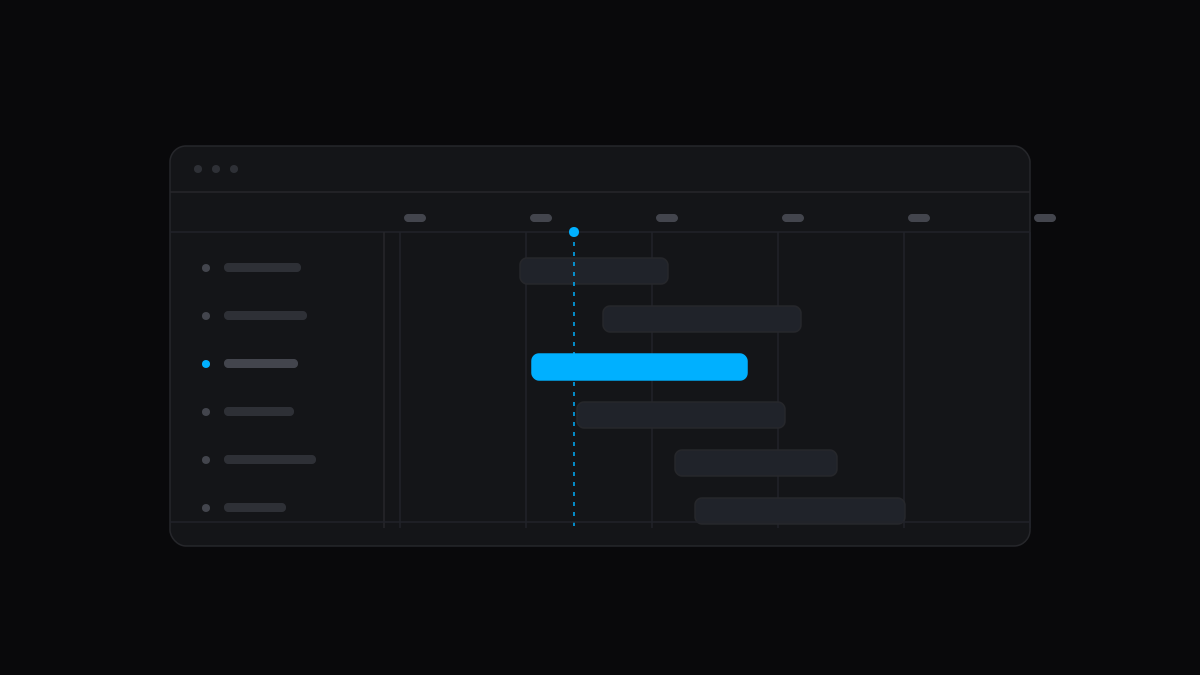
Scheduling used to assume infinite machines and people. It now plans against the capacity you actually have.
Finite-capacity scheduling
The scheduler reserves capacity on an operation's work center, and operators are gated by the abilities a job operation requires.
The Gantt explains its placements, so you can see why an operation landed where it did instead of guessing.
Enterprise SAML SSO
Carbon now supports SAML single sign-on, so your team can sign in through your identity provider. Account linking is provider-agnostic, and the configuration lives in Settings → Security.
Two-factor enforcement is also now available on the Business plan.
Platform exchange rates
Currency exchange rates are now managed platform-globally, with per-company overrides when your company needs to pin its own rate.
The chart of accounts also gained an opening-balances tool for bringing existing books into Carbon.
Improvements
- Jobs can copy their method from another job, with a version picker for choosing which method revision to source.
- A BOM-level replenishment system and purchasing units of measure.
- API keys can opt in to an accounting delete scope.
- A refreshed app shell for ERP and MES with an inset, floating layout, plus responsive mobile navigation.
- CSV import for storage units, with validation that rejects cross-location and name-colliding rows.
- Item IDs may now be lowercase, and chart-of-accounts account mapping covers the full chart.
- Purchase order PDFs show the company EORI number below the VAT number.
- Onboarding now presents the Starter, Business, and Enterprise plans.
Fixes
- Item supersession swaps now resolve correctly across every job-creation flow, so a phased-out part's successor is substituted consistently.
- The schedule no longer reopens finished operations when a location's schedule is regenerated.
- Items with inventory or cost history can no longer be deleted out from under their records.
- Posting a purchase invoice no longer marks it paid.
- MES shows the item revision in the operation header, and an unconverted 3D model renders as a slide instead of a load error.