
Change notices
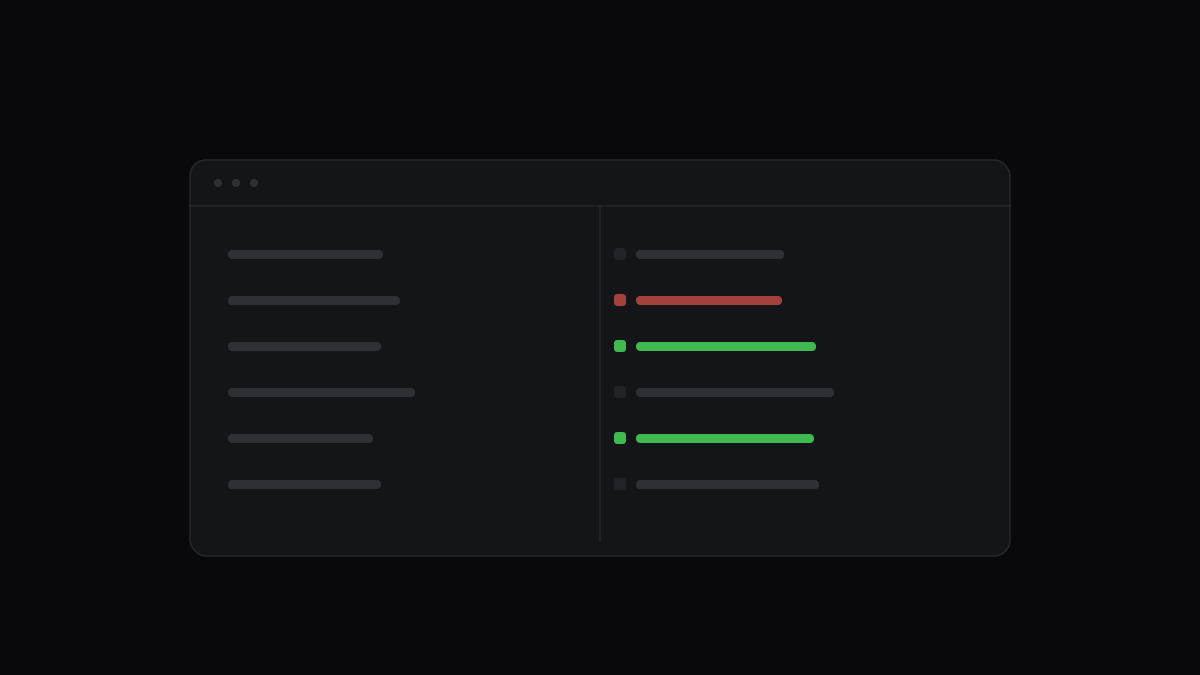
A design change usually touches several parts at once. Change notices let you revise them together and release them together.
Change notices
A change notice groups the parts whose designs are changing, revises each one on a hidden draft, and releases them together. It answers what changed, who owns it, and what the new version supersedes, without touching a live method until release.
Pick the affected items, edit each one's real bill of materials and bill of process inside the notice, review it as a diff with new part properties highlighted, and link issues to it. Change notices live under Items → Change notices.
Inventory valuation
The inventory valuation report ties on-hand stock to the ledger, and inventory adjustments post to the general ledger.
Service items and period close
Service is now a first-class item type. The accounting period close has a full lifecycle, with a close checklist and posted-record immutability.
Improvements
- Assembly instructions on items.
- Short-close purchase order lines, with partial goods-receipt visibility.
- MES suggests a batch on issue and returns unused picks when a job completes.
- Overhead absorption and account defaults improvements, with draft journals excluded from reports.
- Raw materials and finished goods accounts.
- Self-serve enrollment in the Implementation Hub.
- A faster CAD pipeline with a progressive 3D viewer.
- Top-level external notes are included in document emails.
- Detail pages show the entity id in the breadcrumb.
- Korean translation.
- Academy: Engineering Change Orders video.
Fixes
- GAAP-correct journal entries for fixed asset registration and disposal.
- Purchase price variance is no longer double-counted; the GL and cost subledger move together.
- Default markup no longer overwrites set quote-line prices.
- Subassemblies are scheduled by their item lead time.
- Planning reads top-level demand projections.
- Invoicing quantities are short-close aware.
- Customer reference, salesperson, and engineering contact carry through to sales orders.
- Selling a fixed asset no longer requires a method type.
- The first tag can be created when none exist.
- MES add-row suggestions prefer the pick-method order and clamp batch quantity.